greek clean
overview
designing a simple way to manage campus waste
overview
designing a simple way to manage campus waste
designing a simple way to manage campus waste
designing a simple way to manage campus waste
client
independent student project
my role
led entire product design from research to conception, visualization and testing
project time
3 weeks
greek clean is a mobile app created to help college organizations handle trash more responsibly and with less stress. fraternities and sororities throw frequent events, but their bins often overflow before the city’s scheduled pickups. this leads to frustration, fines, and complaints from neighbors.
the idea was simple: create an app that lets users schedule trash pickups, rent dumpsters, or find nearby bins that legally accept waste. greek clean was designed to make that process quick, cheap, and reliable.
so far, there aren’t any apps made for how fraternities or sororities actually deal with trash. most students rely on city pickup forms or random dumpster rentals that are hard to book, slow to confirm, and often don’t show up.
to understand the gap, i looked at on-demand waste apps, recycling services, and how campuses currently manage cleanup. most tools were outdated, made for homeowners, and confusing to use especially on mobile.
greek clean steps into that space as a simple, student-focused alternative: clear pricing, quick scheduling, and one place to organize cleanup instead of endless calls and forms.
opportunities
through a shared platform, trash management can become more organized and transparent for fraternities and sororities. students, campus facilities, and local haulers can coordinate pickups more easily without relying on multiple phone calls or unclear city systems.
trash issues often go unnoticed until it’s too late. scheduling tools and gentle reminders can help prevent overflow before it happens and raise awareness for proper disposal.
offering flexible pricing, shared pickups, or student-run crews can make responsible waste management affordable and appealing for college groups.
showing recycling stats or total waste collected can make cleanup feel more rewarding. and let’s be honest we all know how many beer cans come out of a weekend at a frat party. turning that chaos into visible progress helps students see the positive side of their degeneracy.
challenges
trash removal fees change depending on size, timing, and provider. maintaining pricing transparency while keeping services affordable will require careful balance.
the success of the app depends on dependable partners or student crew members. missed pickups or delays can quickly reduce trust among users.
offering flexible pricing, shared pickups, or student-run crews can make responsible waste management affordable and appealing for college groups.
waste regulations vary by region. ensuring that all services offered through the app stay within local laws while remaining user-friendly is essential.
i conducted six in-depth interviews with fraternity and sorority members and shared a google forms survey with several fraternities and sororities at ut austin to gather broader feedback.
the goal was to learn:
how students currently manage and schedule trash pickups
what problems they face with existing waste systems
how cost and convenience affect their cleanup decisions
what kind of service they would actually use
the survey received 64 responses within two days. although the sample was small, the feedback showed consistent frustrations across organizations.
most students still schedule trash pickup through city websites or by phone. the process is confusing, and many said they never get confirmation or updates afterward.
after parties or move-outs, dumpsters fill up fast. city crews often skip pickups because of overflow rules, leaving students stuck with piles of trash.
many students said they avoid private dumpster rentals or paid pickups because they’re too expensive. instead, they admit to using other people’s bins just to get rid of the trash.
students aren’t sure who manages trash around their houses — the city, the campus, or the landlord. this confusion leads to delays and frustration when bins stay full for days.
most want on-call or next-day pickup options. campus and city schedules don’t match the unpredictable timing of college events.
to design a product that fits real college life, i created two key personas based on interviews and survey insights. they reflect the main types of students who regularly deal with post-party cleanup and shared waste issues.
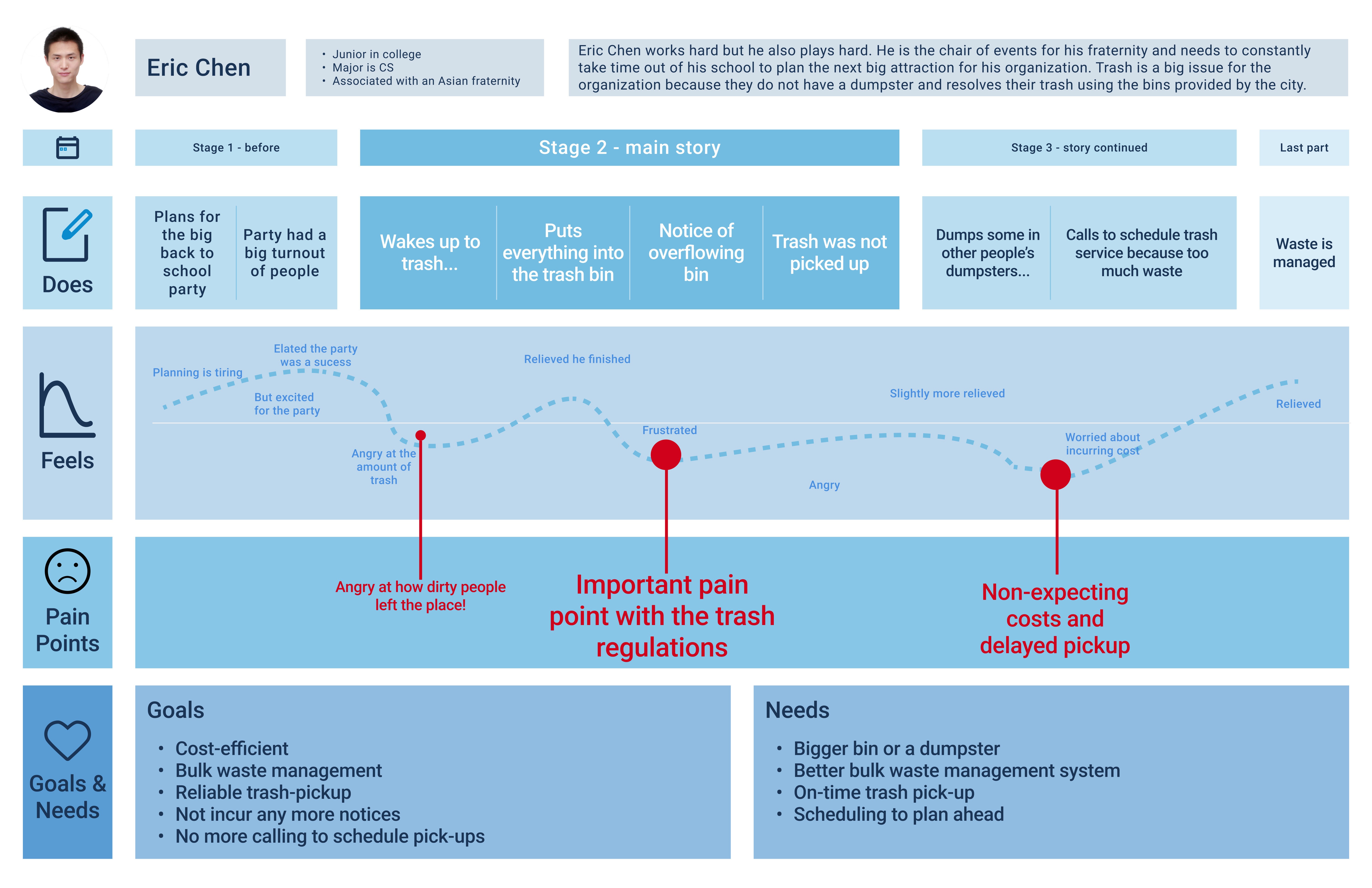
to design with empathy, i mapped out the full journey students go through. from realizing there’s a mess to seeing it finally cleaned up. this helped me step into their shoes and understand what they actually feel, think, and need at each stage. by focusing on empathy, i could see beyond the tasks and pinpoint where frustration builds, where motivation drops, and where greek clean can genuinely make life easier.
before moving into the visuals, i compared the original flow of how students currently handle trash with the new experience designed in greek clean. this comparison made it clear where confusion, waiting, and extra steps existed.
current flow:
event ends late at night; trash piles up indoors and around bins
one member volunteers (or gets pressured) to deal with it
they call city waste services, find long wait times or weekend closures
pickup forms are confusing, and confirmation takes days
trash sits outside, neighbors complain, or fines appear
new flow:
user opens greek clean and selects "hire a crew"
adds details:address, preferred pickup window, photos of trash
gets instant cost estimate and confirmation
app sends live updates and user recieves small reward points
current flow:
students moving out or cleaning large houses don’t have space for bulky waste
call private haulers or search online for rentals
pricing is unclear, minimum rentals are 3–7 days, often too expensive
pickups delayed or bins left overflowing
scheduling requires multiple calls and contracts
new flow:
user selects "rent a dumpster" —> chooses duration and size
app shows pricing upfront, including pickup and return
user books directly and receives confirmation
reminders appear before pickup to prevent overflow
current flow:
bins overflow before scheduled pickup
users look for nearby dumpsters or parking lot containers
often guess which bins are public vs private
risk conflicts with neighbors or property managers
new flow:
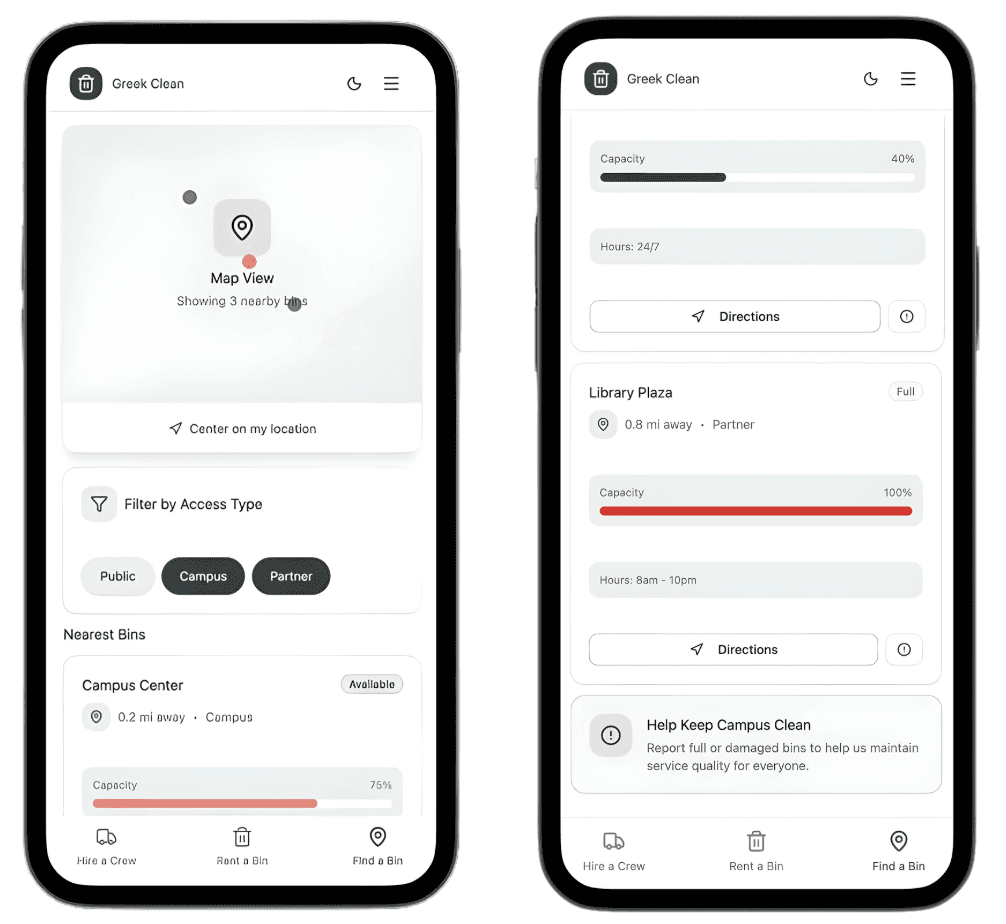
user selects "find a bin" —> allow location
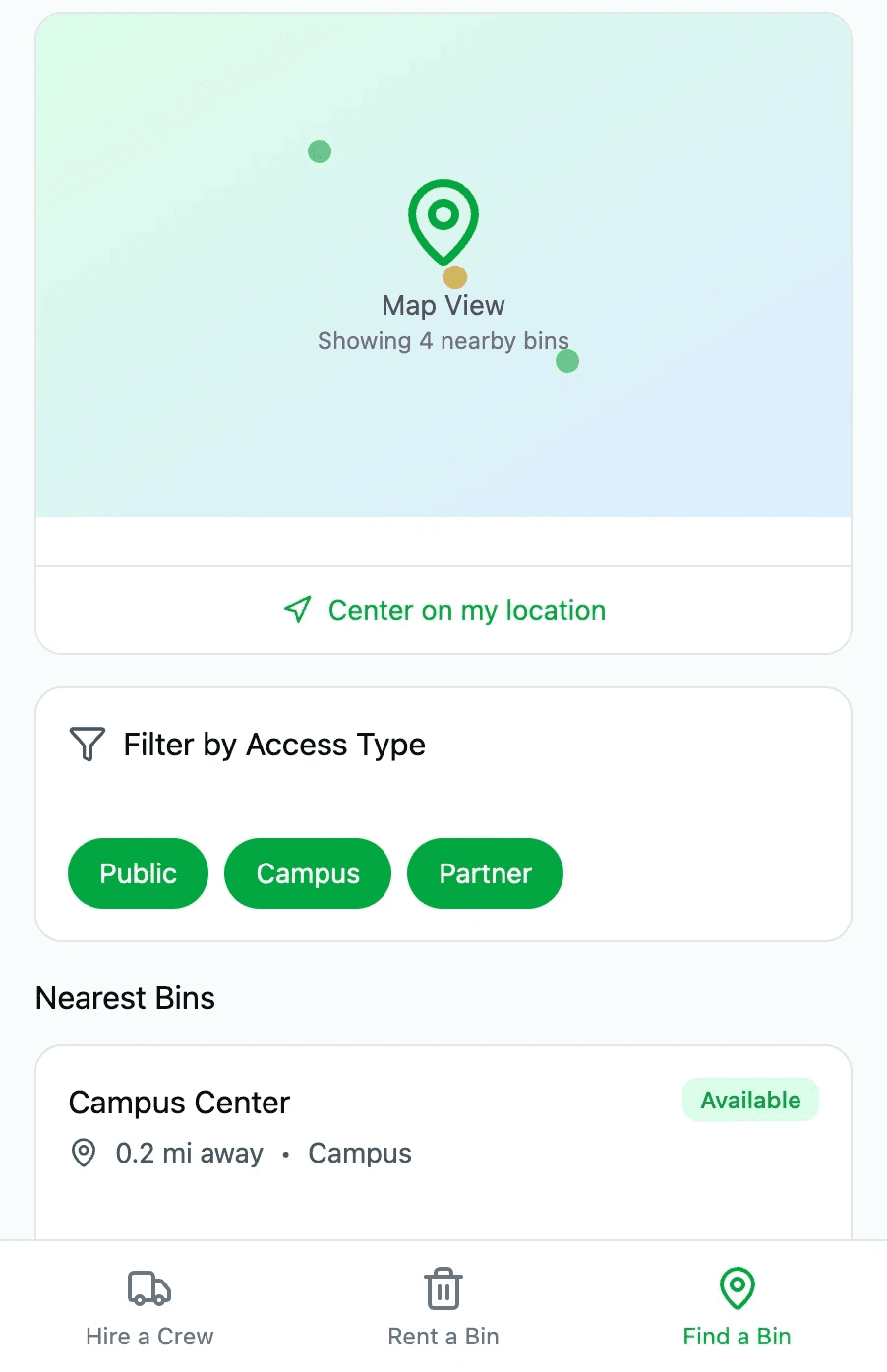
map view shows nearby legal bins & their availability
after disposal user can mark bin as "used" for students to see updated bin status
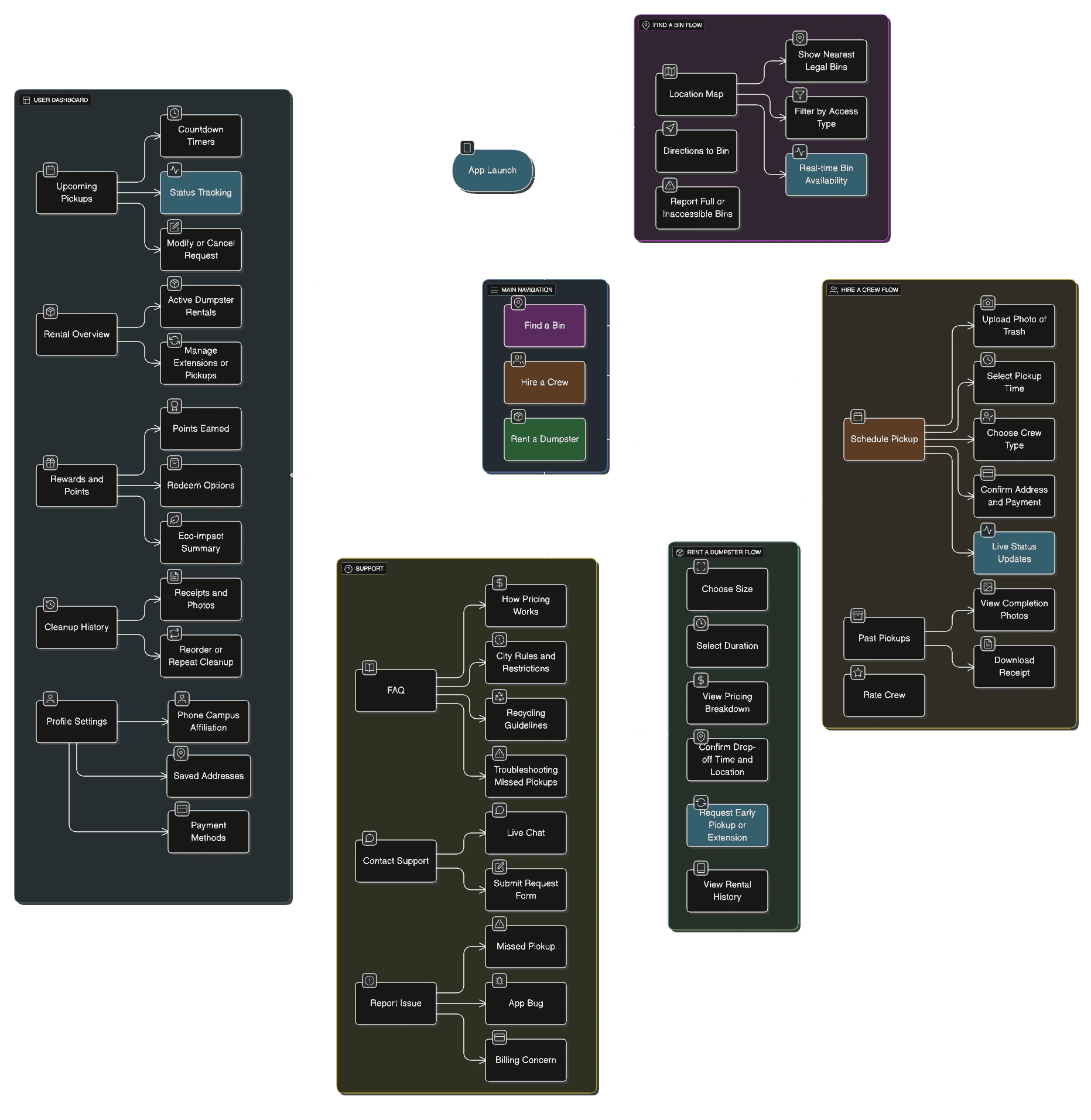
the main navigation of greek clean is built around five key sections:
hire a crew – schedule on-demand pickups after parties or move-outs
rent a dumpster – book short-term dumpster rentals for larger cleanups
find a bin – locate nearby legal bins for quick trash drop-offs
dashboard / profile – view upcoming pickups, past cleanups, rewards, and saved info
support – access help, faqs, contact options, and report issues
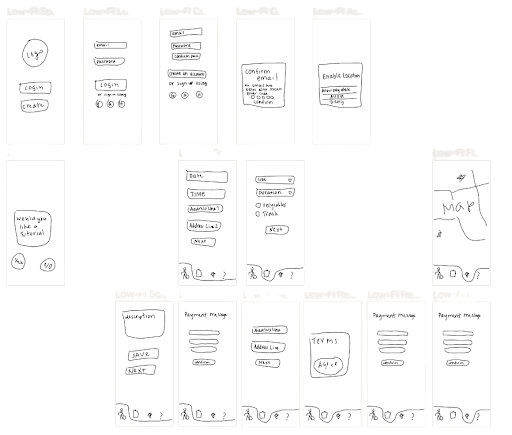
to start, i sketched out low and mid fidelity wireframes to explore layout ideas and basic navigation. these quick paper drafts helped test how users might move through the three main services: hire a crew, rent a dumpster, and find a bin, before investing time in digital design. it was a fast way to see what felt intuitive and what didn’t. early feedback showed that users preferred clear progress indicators and large, easy to tap buttons, especially when booking late at night after events.
after refining the sketches, i built mid and high fidelity prototypes in figma and added interactions to simulate a real app experience. these clickable versions let me test transitions, button placements, and micro copy in a realistic way. user feedback highlighted small but important details like the need for confirmation screens, labeled icons, and progress bars during booking. adjusting these helped make the experience feel smoother and more trustworthy.
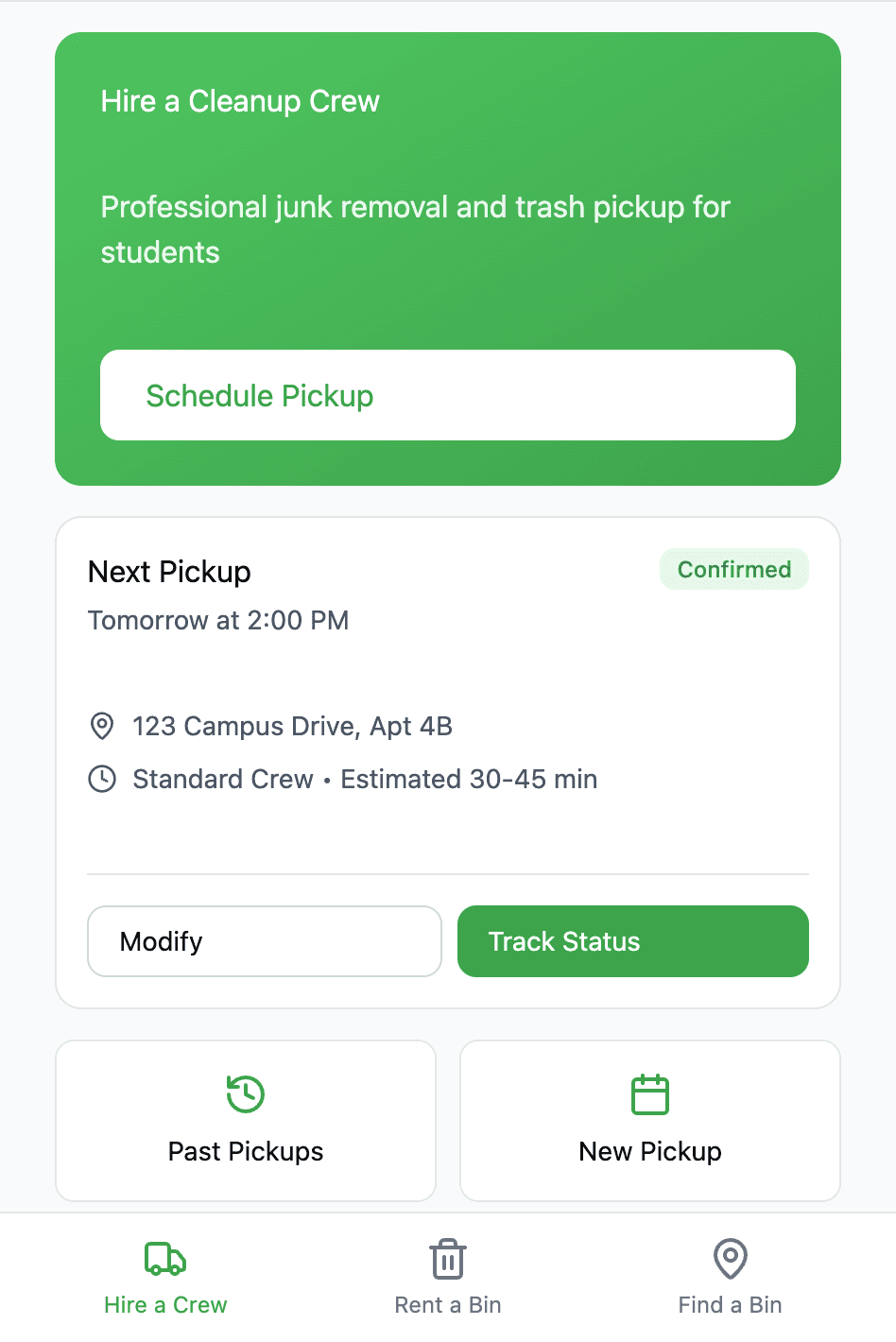
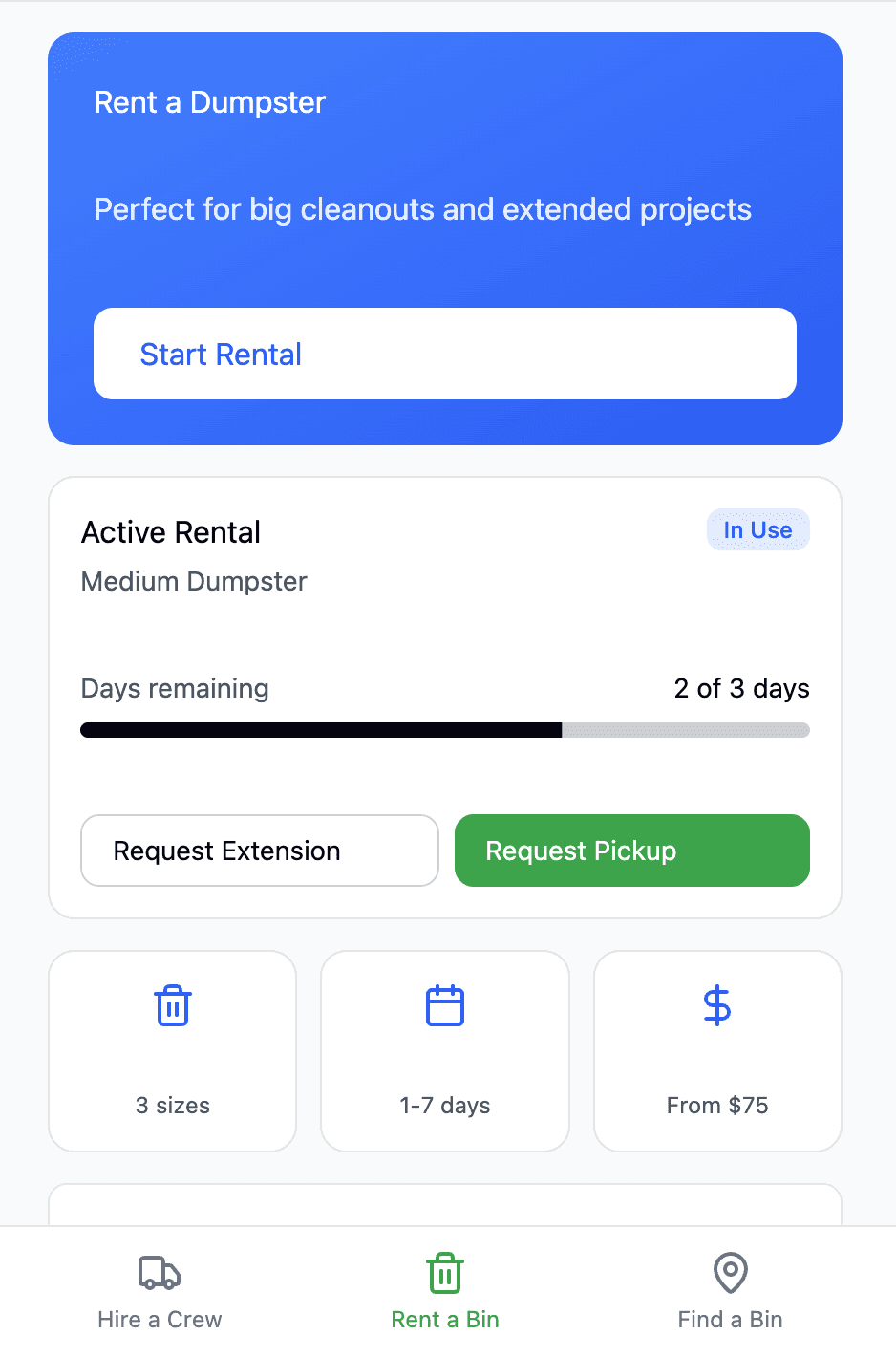
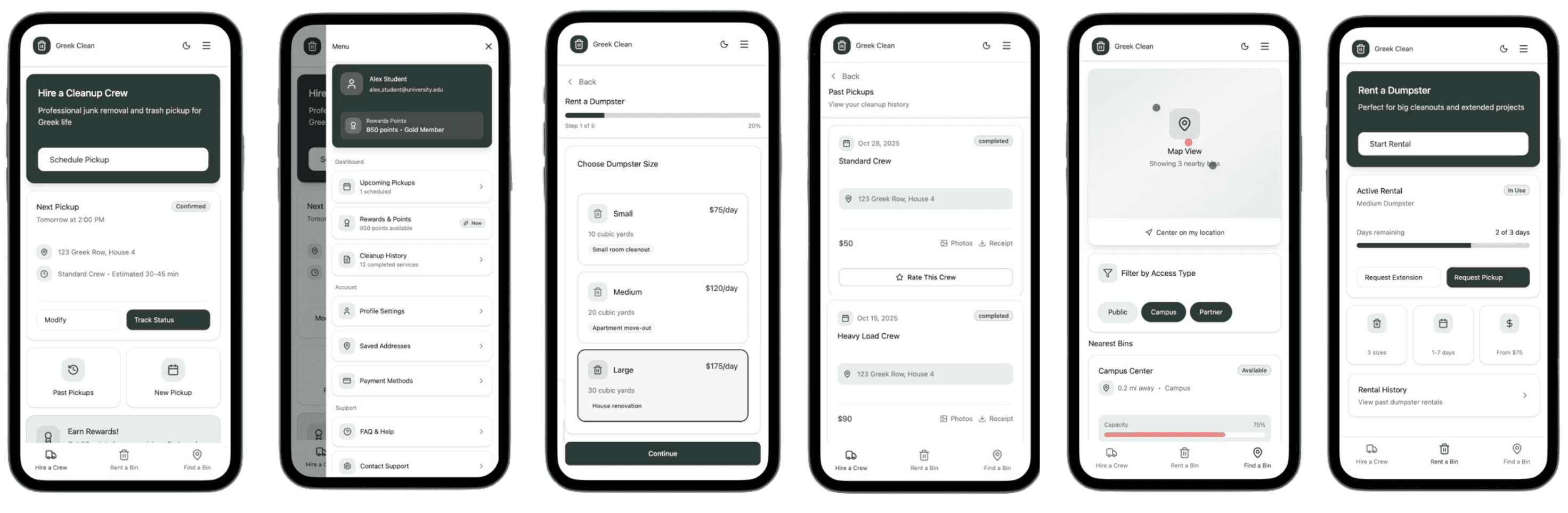
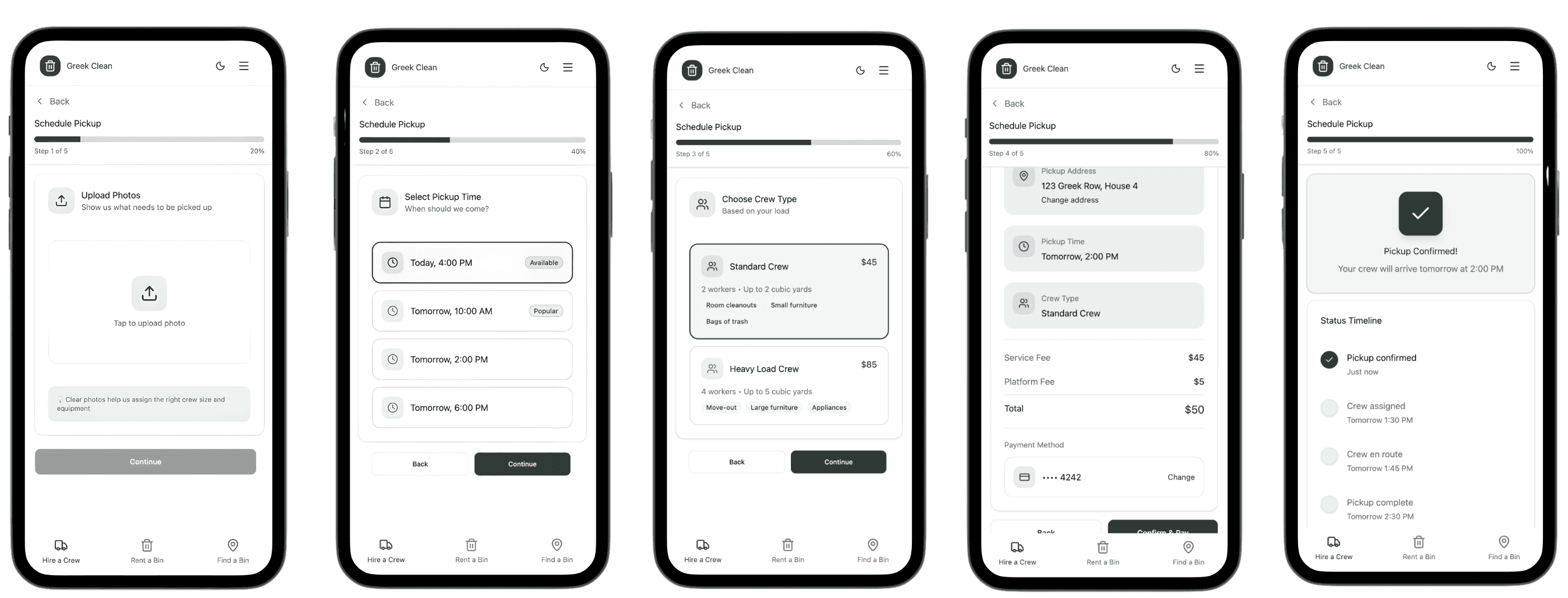
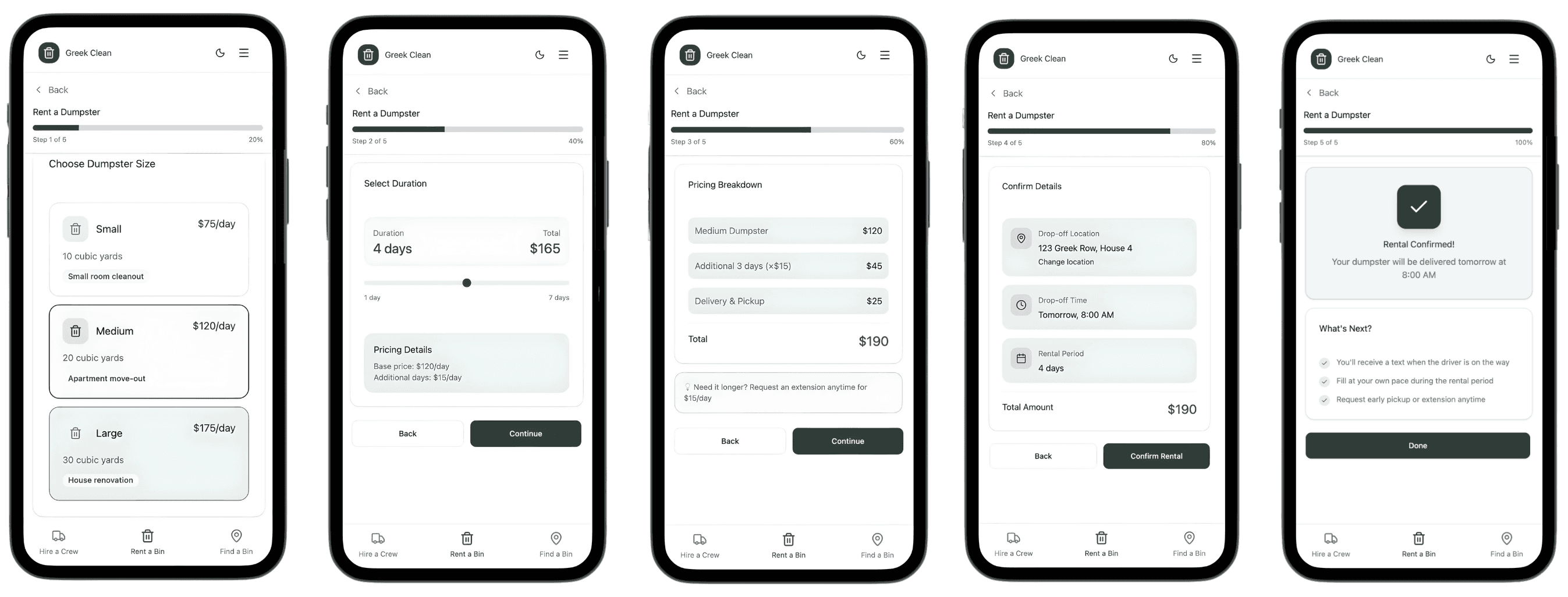
once the prototype was built, i tested it with five students across two campuses. each person walked through three core tasks: scheduling a pickup, renting a dumpster for move out, and finding a nearby bin.
a few consistent insights came up:
users wanted a visible progress indicator so they always knew how many steps were left
everyone preferred seeing price early instead of at the end
confirmation screens were important because students did not want to wonder if a request went through
icons alone caused confusion, so text labels were added to navigation
shorter forms worked best, especially after busy nights or during move out stress
overall, usability testing reinforced that students want speed, clarity, and zero guessing. small tweaks like adding clearer buttons and micro text made the experience feel smoother and more trustworthy.
#1 simple wins on campuses
students do not need fancy features. they need fast, obvious actions they can use half asleep after a party or stressed during move out week. clarity beat creativity almost every time.
#2 progress feedback gives peace of mind
something as small as a confirmation screen or progress bar makes users feel like things are actually happening. it builds trust, especially when students are spending money and hoping the trash truly disappears.
#3 labels matter more than icons
i originally loved the idea of icon only navigation. users did not. once text labels were added, the entire app felt easier and more reliable.
#4 rough prototypes reveal more truth than polished screens
the messiest versions of this app taught us the most. quick sketches and half-working flows surfaced more problems (and opportunities) than weeks of polished UI ever did.
#5 empathy is the best design tool
greek clean worked because the design came from real conversations, not assumptions. when you understand someone’s pain, even a trash app becomes meaningful.
#6 listening to confusion is more valuable than listening to praise
some of our best fixes came from moments when a user paused, frowned, and said “wait… what am i supposed to do here?” those tiny points of confusion were more useful than any positive feedback.
opportunities
through a shared platform, trash management can become more organized and transparent for fraternities and sororities. students, campus facilities, and local haulers can coordinate pickups more easily without relying on multiple phone calls or unclear city systems.
trash issues often go unnoticed until it’s too late. scheduling tools and gentle reminders can help prevent overflow before it happens and raise awareness for proper disposal.
offering flexible pricing, shared pickups, or student-run crews can make responsible waste management affordable and appealing for college groups.
showing recycling stats or total waste collected can make cleanup feel more rewarding. and let’s be honest we all know how many beer cans come out of a weekend at a frat party. turning that chaos into visible progress helps students see the positive side of their degeneracy.
challenges
trash removal fees change depending on size, timing, and provider. maintaining pricing transparency while keeping services affordable will require careful balance.
the success of the app depends on dependable partners or student crew members. missed pickups or delays can quickly reduce trust among users.
offering flexible pricing, shared pickups, or student-run crews can make responsible waste management affordable and appealing for college groups.
waste regulations vary by region. ensuring that all services offered through the app stay within local laws while remaining user-friendly is essential.
most students still schedule trash pickup through city websites or by phone. the process is confusing, and many said they never get confirmation or updates afterward.
after parties or move-outs, dumpsters fill up fast. city crews often skip pickups because of overflow rules, leaving students stuck with piles of trash.
many students said they avoid private dumpster rentals or paid pickups because they’re too expensive. instead, they admit to using other people’s bins just to get rid of the trash.
students aren’t sure who manages trash around their houses — the city, the campus, or the landlord. this confusion leads to delays and frustration when bins stay full for days.
most want on-call or next-day pickup options. campus and city schedules don’t match the unpredictable timing of college events.
most students still schedule trash pickup through city websites or by phone. the process is confusing, and many said they never get confirmation or updates afterward.
after parties or move-outs, dumpsters fill up fast. city crews often skip pickups because of overflow rules, leaving students stuck with piles of trash.
many students said they avoid private dumpster rentals or paid pickups because they’re too expensive. instead, they admit to using other people’s bins just to get rid of the trash.
students aren’t sure who manages trash around their houses — the city, the campus, or the landlord. this confusion leads to delays and frustration when bins stay full for days.
most want on-call or next-day pickup options. campus and city schedules don’t match the unpredictable timing of college events.
most students still schedule trash pickup through city websites or by phone. the process is confusing, and many said they never get confirmation or updates afterward.
after parties or move-outs, dumpsters fill up fast. city crews often skip pickups because of overflow rules, leaving students stuck with piles of trash.
many students said they avoid private dumpster rentals or paid pickups because they’re too expensive. instead, they admit to using other people’s bins just to get rid of the trash.
students aren’t sure who manages trash around their houses — the city, the campus, or the landlord. this confusion leads to delays and frustration when bins stay full for days.
most want on-call or next-day pickup options. campus and city schedules don’t match the unpredictable timing of college events.
designing a simple way to manage campus waste
designing a simple way to manage campus waste
client
independent student project
my role
led entire product design from research to conception, visualization and testing
project time
3 weeks
greek clean is a mobile app created to help college organizations handle trash more responsibly and with less stress. fraternities and sororities throw frequent events, but their bins often overflow before the city’s scheduled pickups. this leads to frustration, fines, and complaints from neighbors.
the idea was simple: create an app that lets users schedule trash pickups, rent dumpsters, or find nearby bins that legally accept waste. greek clean was designed to make that process quick, cheap, and reliable.
so far, there aren’t any apps made for how fraternities or sororities actually deal with trash. most students rely on city pickup forms or random dumpster rentals that are hard to book, slow to confirm, and often don’t show up.
to understand the gap, i looked at on-demand waste apps, recycling services, and how campuses currently manage cleanup. most tools were outdated, made for homeowners, and confusing to use especially on mobile.
greek clean steps into that space as a simple, student-focused alternative: clear pricing, quick scheduling, and one place to organize cleanup instead of endless calls and forms.
opportunities
through a shared platform, trash management can become more organized and transparent for fraternities and sororities. students, campus facilities, and local haulers can coordinate pickups more easily without relying on multiple phone calls or unclear city systems.
trash issues often go unnoticed until it’s too late. scheduling tools and gentle reminders can help prevent overflow before it happens and raise awareness for proper disposal.
offering flexible pricing, shared pickups, or student-run crews can make responsible waste management affordable and appealing for college groups.
showing recycling stats or total waste collected can make cleanup feel more rewarding. and let’s be honest we all know how many beer cans come out of a weekend at a frat party. turning that chaos into visible progress helps students see the positive side of their degeneracy.
challenges
trash removal fees change depending on size, timing, and provider. maintaining pricing transparency while keeping services affordable will require careful balance.
the success of the app depends on dependable partners or student crew members. missed pickups or delays can quickly reduce trust among users.
offering flexible pricing, shared pickups, or student-run crews can make responsible waste management affordable and appealing for college groups.
waste regulations vary by region. ensuring that all services offered through the app stay within local laws while remaining user-friendly is essential.
i conducted six in-depth interviews with fraternity and sorority members and shared a google forms survey with several fraternities and sororities at ut austin to gather broader feedback.
the goal was to learn:
how students currently manage and schedule trash pickups
what problems they face with existing waste systems
how cost and convenience affect their cleanup decisions
what kind of service they would actually use
the survey received 64 responses within two days. although the sample was small, the feedback showed consistent frustrations across organizations.
most students still schedule trash pickup through city websites or by phone. the process is confusing, and many said they never get confirmation or updates afterward.
after parties or move-outs, dumpsters fill up fast. city crews often skip pickups because of overflow rules, leaving students stuck with piles of trash.
many students said they avoid private dumpster rentals or paid pickups because they’re too expensive. instead, they admit to using other people’s bins just to get rid of the trash.
students aren’t sure who manages trash around their houses — the city, the campus, or the landlord. this confusion leads to delays and frustration when bins stay full for days.
most want on-call or next-day pickup options. campus and city schedules don’t match the unpredictable timing of college events.
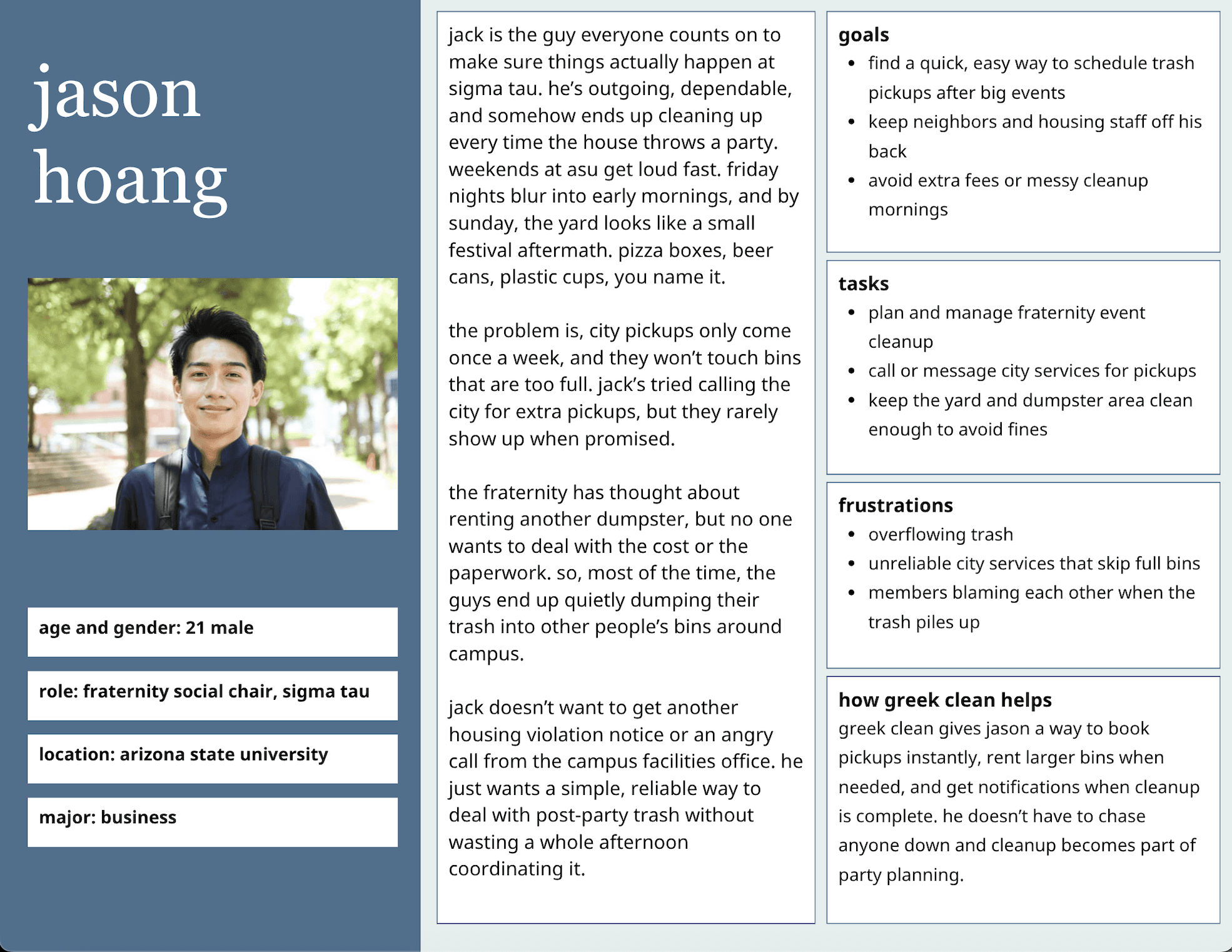
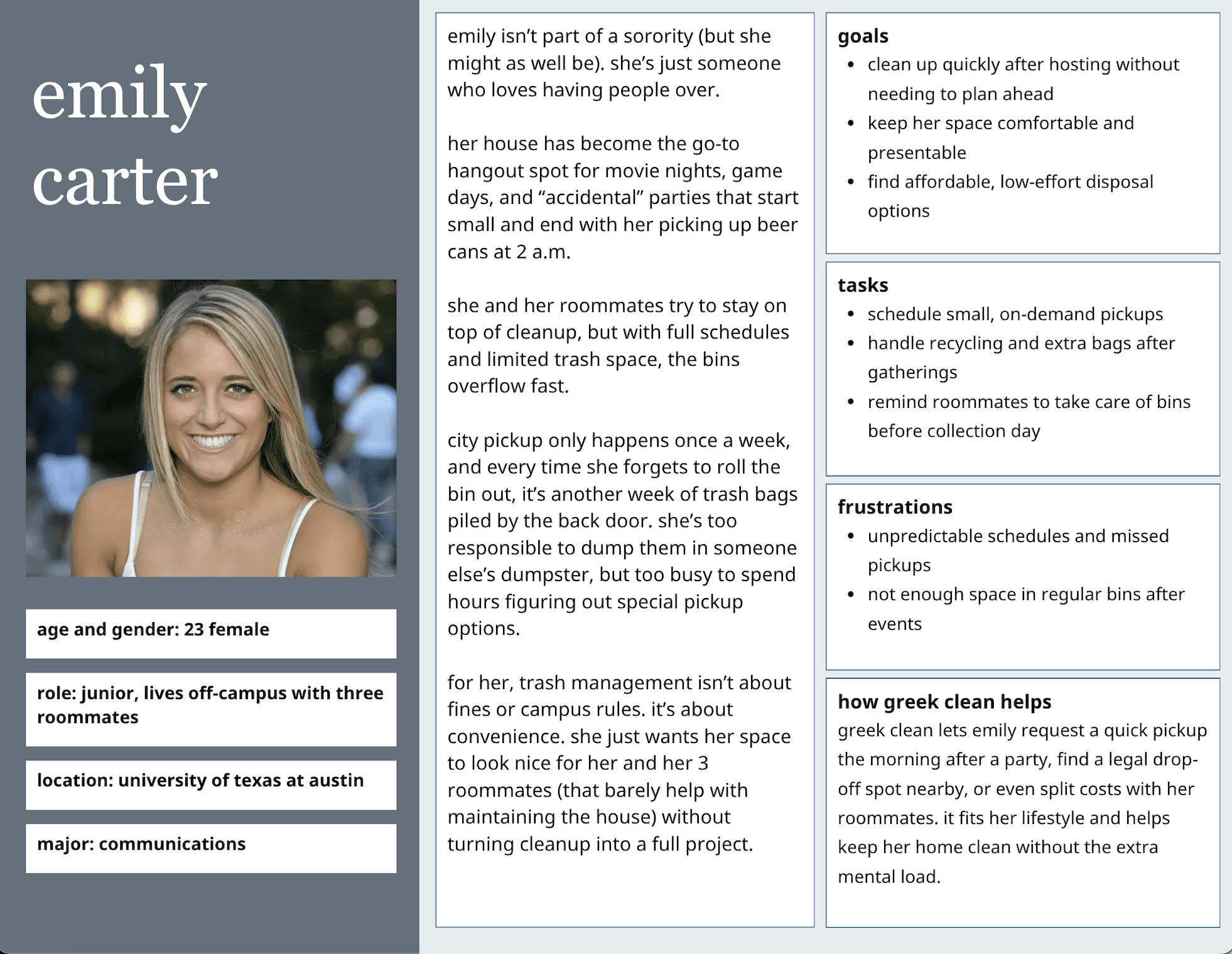
to design a product that fits real college life, i created two key personas based on interviews and survey insights. they reflect the main types of students who regularly deal with post-party cleanup and shared waste issues.
to design with empathy, i mapped out the full journey students go through. from realizing there’s a mess to seeing it finally cleaned up. this helped me step into their shoes and understand what they actually feel, think, and need at each stage. by focusing on empathy, i could see beyond the tasks and pinpoint where frustration builds, where motivation drops, and where greek clean can genuinely make life easier.
before moving into the visuals, i compared the original flow of how students currently handle trash with the new experience designed in greek clean. this comparison made it clear where confusion, waiting, and extra steps existed.
current flow:
event ends late at night; trash piles up indoors and around bins
one member volunteers (or gets pressured) to deal with it
they call city waste services, find long wait times or weekend closures
pickup forms are confusing, and confirmation takes days
trash sits outside, neighbors complain, or fines appear
new flow:
user opens greek clean and selects "hire a crew"
adds details:address, preferred pickup window, photos of trash
gets instant cost estimate and confirmation
app sends live updates and user recieves small reward points
current flow:
students moving out or cleaning large houses don’t have space for bulky waste
call private haulers or search online for rentals
pricing is unclear, minimum rentals are 3–7 days, often too expensive
pickups delayed or bins left overflowing
scheduling requires multiple calls and contracts
new flow:
user selects "rent a dumpster" —> chooses duration and size
app shows pricing upfront, including pickup and return
user books directly and receives confirmation
reminders appear before pickup to prevent overflow
current flow:
bins overflow before scheduled pickup
users look for nearby dumpsters or parking lot containers
often guess which bins are public vs private
risk conflicts with neighbors or property managers
new flow:
user selects "find a bin" —> allow location
map view shows nearby legal bins & their availability
after disposal user can mark bin as "used" for students to see updated bin status
the main navigation of greek clean is built around five key sections:
hire a crew – schedule on-demand pickups after parties or move-outs
rent a dumpster – book short-term dumpster rentals for larger cleanups
find a bin – locate nearby legal bins for quick trash drop-offs
dashboard / profile – view upcoming pickups, past cleanups, rewards, and saved info
support – access help, faqs, contact options, and report issues
to start, i sketched out low and mid fidelity wireframes to explore layout ideas and basic navigation. these quick paper drafts helped test how users might move through the three main services: hire a crew, rent a dumpster, and find a bin, before investing time in digital design. it was a fast way to see what felt intuitive and what didn’t. early feedback showed that users preferred clear progress indicators and large, easy to tap buttons, especially when booking late at night after events.
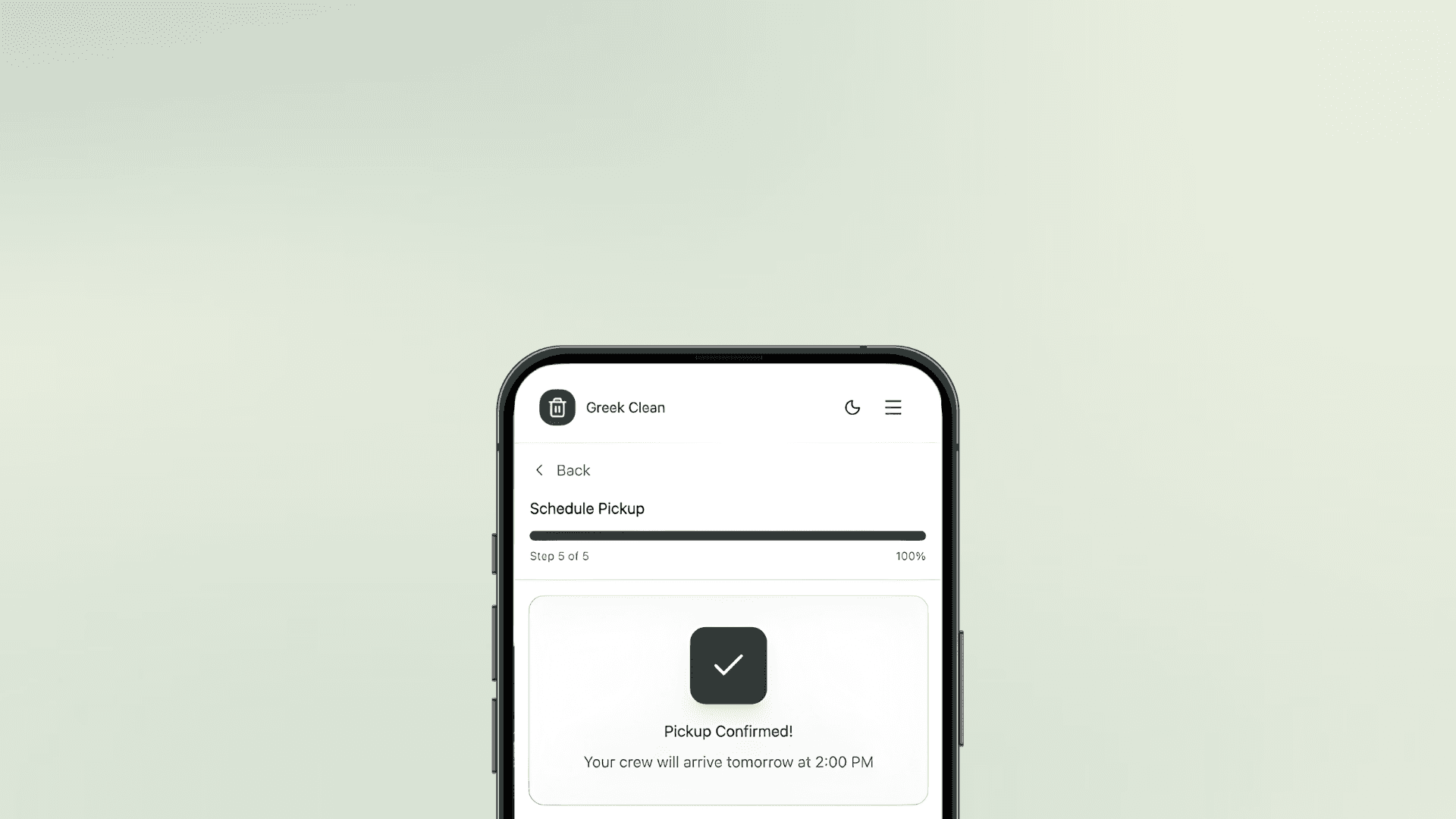
after refining the sketches, i built mid and high fidelity prototypes in figma and added interactions to simulate a real app experience. these clickable versions let me test transitions, button placements, and micro copy in a realistic way. user feedback highlighted small but important details like the need for confirmation screens, labeled icons, and progress bars during booking. adjusting these helped make the experience feel smoother and more trustworthy.
once the prototype was built, i tested it with five students across two campuses. each person walked through three core tasks: scheduling a pickup, renting a dumpster for move out, and finding a nearby bin.
a few consistent insights came up:
users wanted a visible progress indicator so they always knew how many steps were left
everyone preferred seeing price early instead of at the end
confirmation screens were important because students did not want to wonder if a request went through
icons alone caused confusion, so text labels were added to navigation
shorter forms worked best, especially after busy nights or during move out stress
overall, usability testing reinforced that students want speed, clarity, and zero guessing. small tweaks like adding clearer buttons and micro text made the experience feel smoother and more trustworthy.
#1 simple wins on campuses
students do not need fancy features. they need fast, obvious actions they can use half asleep after a party or stressed during move out week. clarity beat creativity almost every time.
#2 progress feedback gives peace of mind
something as small as a confirmation screen or progress bar makes users feel like things are actually happening. it builds trust, especially when students are spending money and hoping the trash truly disappears.
#3 labels matter more than icons
i originally loved the idea of icon only navigation. users did not. once text labels were added, the entire app felt easier and more reliable.
#4 rough prototypes reveal more truth than polished screens
the messiest versions of this app taught us the most. quick sketches and half-working flows surfaced more problems (and opportunities) than weeks of polished UI ever did.
#5 empathy is the best design tool
greek clean worked because the design came from real conversations, not assumptions. when you understand someone’s pain, even a trash app becomes meaningful.
#6 listening to confusion is more valuable than listening to praise
some of our best fixes came from moments when a user paused, frowned, and said “wait… what am i supposed to do here?” those tiny points of confusion were more useful than any positive feedback.
opportunities
through a shared platform, trash management can become more organized and transparent for fraternities and sororities. students, campus facilities, and local haulers can coordinate pickups more easily without relying on multiple phone calls or unclear city systems.
trash issues often go unnoticed until it’s too late. scheduling tools and gentle reminders can help prevent overflow before it happens and raise awareness for proper disposal.
offering flexible pricing, shared pickups, or student-run crews can make responsible waste management affordable and appealing for college groups.
showing recycling stats or total waste collected can make cleanup feel more rewarding. and let’s be honest we all know how many beer cans come out of a weekend at a frat party. turning that chaos into visible progress helps students see the positive side of their degeneracy.
challenges
trash removal fees change depending on size, timing, and provider. maintaining pricing transparency while keeping services affordable will require careful balance.
the success of the app depends on dependable partners or student crew members. missed pickups or delays can quickly reduce trust among users.
offering flexible pricing, shared pickups, or student-run crews can make responsible waste management affordable and appealing for college groups.
waste regulations vary by region. ensuring that all services offered through the app stay within local laws while remaining user-friendly is essential.
most students still schedule trash pickup through city websites or by phone. the process is confusing, and many said they never get confirmation or updates afterward.
after parties or move-outs, dumpsters fill up fast. city crews often skip pickups because of overflow rules, leaving students stuck with piles of trash.
many students said they avoid private dumpster rentals or paid pickups because they’re too expensive. instead, they admit to using other people’s bins just to get rid of the trash.
students aren’t sure who manages trash around their houses — the city, the campus, or the landlord. this confusion leads to delays and frustration when bins stay full for days.
most want on-call or next-day pickup options. campus and city schedules don’t match the unpredictable timing of college events.
most students still schedule trash pickup through city websites or by phone. the process is confusing, and many said they never get confirmation or updates afterward.
after parties or move-outs, dumpsters fill up fast. city crews often skip pickups because of overflow rules, leaving students stuck with piles of trash.
many students said they avoid private dumpster rentals or paid pickups because they’re too expensive. instead, they admit to using other people’s bins just to get rid of the trash.
students aren’t sure who manages trash around their houses — the city, the campus, or the landlord. this confusion leads to delays and frustration when bins stay full for days.
most want on-call or next-day pickup options. campus and city schedules don’t match the unpredictable timing of college events.
most students still schedule trash pickup through city websites or by phone. the process is confusing, and many said they never get confirmation or updates afterward.
after parties or move-outs, dumpsters fill up fast. city crews often skip pickups because of overflow rules, leaving students stuck with piles of trash.
many students said they avoid private dumpster rentals or paid pickups because they’re too expensive. instead, they admit to using other people’s bins just to get rid of the trash.
students aren’t sure who manages trash around their houses — the city, the campus, or the landlord. this confusion leads to delays and frustration when bins stay full for days.
most want on-call or next-day pickup options. campus and city schedules don’t match the unpredictable timing of college events.