Nebul Global

Nebul is a global architectural firm and urban-planning firm based in Pretoria, South Africa.
With the increasing population and extreme urbanisation which has been said to grow by 80 million people every year, Nebul is aiming to redefine it’s focus towards sustainable projects in line with the latest advancements in technology and environmental practices by “building the future today”.

01

01

Problem Statement

Problem Statement

To stay ahead in the industry, Nebul seeks to redefine its focus by prioritizing sustainable projects aligned with cutting-edge technology and environmental practices, embodying its commitment to 'building the future today.' The problem lies in successfully navigating this shift in focus while ensuring operational efficiency and maintaining a competitive edge in the evolving architectural landscape."

02

02

Solution

Solution

A visual identity that is clean, minimalist, and modern, using a colour palette that evokes stability, confidence, and sophistication. An identity that evoke feelings of progress, modernity, and sustainability, while also exuding a sense of reliability and trust.
03

Imagery

The use of sleek and contemporary design elements in the logo and promotional materials reflects Nebul's dedication to staying at the forefront of the industry. Incorporating architectural symbols and urban landscapes in the imagery reinforces the firm's expertise in shaping the future of cityscapes.

Project showcase laptop mockup

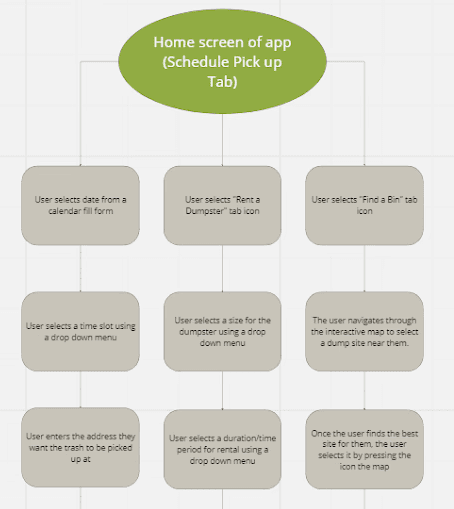
initial user flow


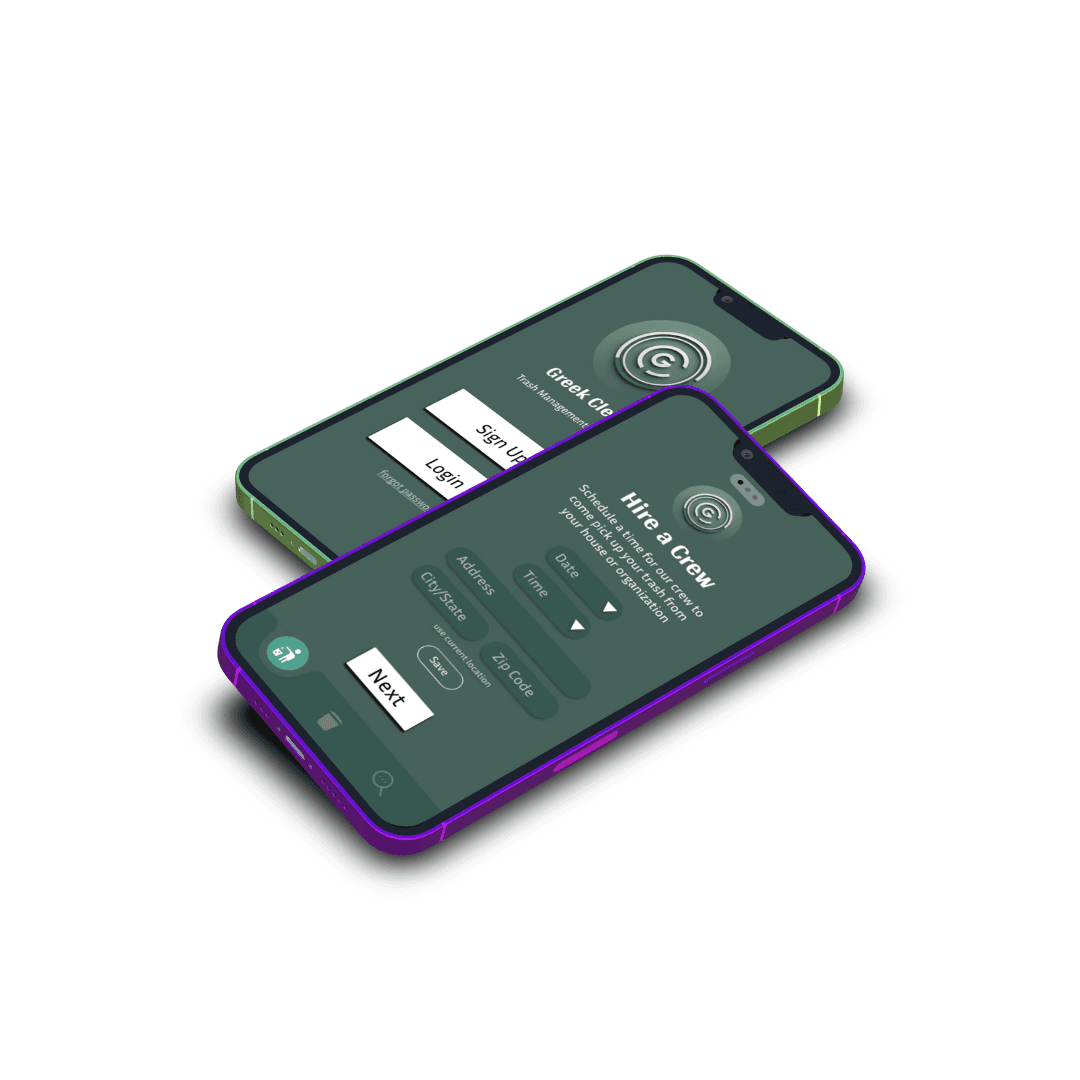
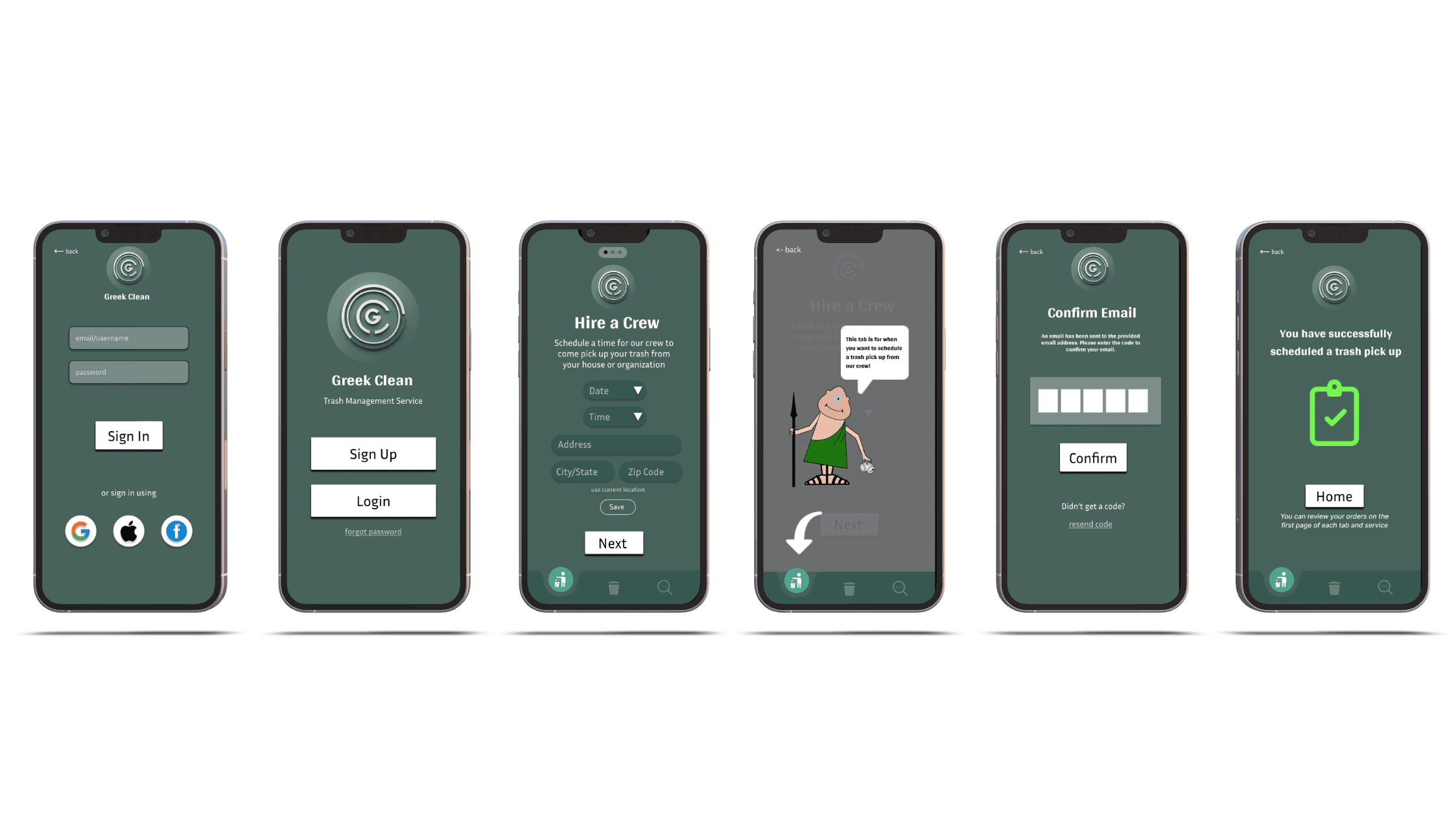
for the first user flow, we mapped out the basic interaction within the greek clean app, focusing on three core actions: scheduling a trash pickup, renting a dumpster, or finding a nearby bin.
the flow captured the main screens and dropdown steps users would go through from the home tab to submission. it helped visualize the general structure, but after conducting interviews, i realized users wanted a clearer, more guided process that reduced decision fatigue and made the experience feel quicker and more intuitive.


initial user flow


for the first user flow, we mapped out the basic interaction within the greek clean app, focusing on three core actions: scheduling a trash pickup, renting a dumpster, or finding a nearby bin.
the flow captured the main screens and dropdown steps users would go through from the home tab to submission. it helped visualize the general structure, but after conducting interviews, i realized users wanted a clearer, more guided process that reduced decision fatigue and made the experience feel quicker and more intuitive.


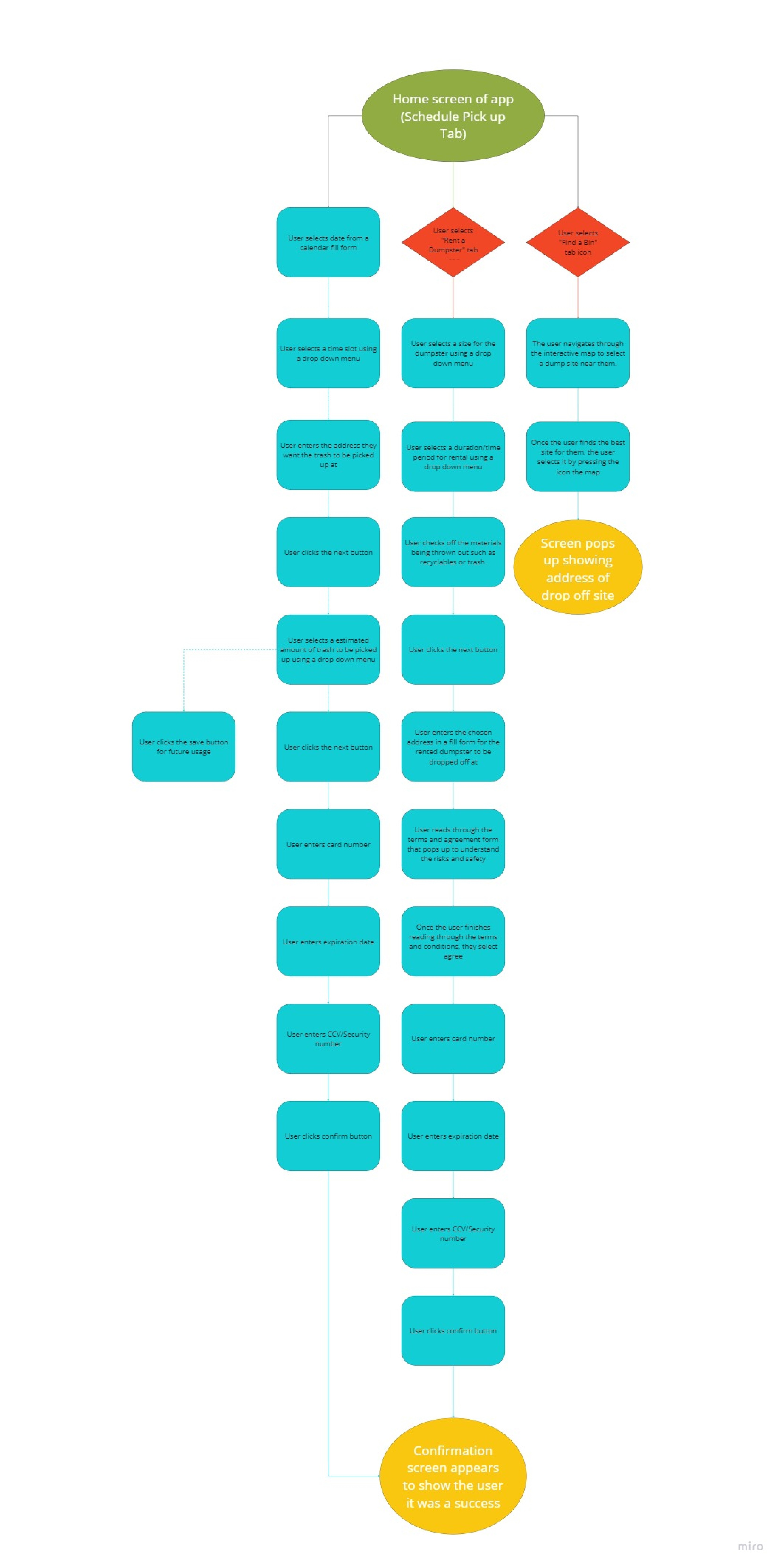
iterated user flow


based on that feedback, i created a more detailed and structured second user flow. i added more steps, like confirmation screens, agreement prompts, and payment input fields, to reflect a complete end-to-end journey. i also broke down each path more clearly—especially for dumpster rentals and bin locations—so it was easier to follow. these updates helped align the flow more closely with user expectations around simplicity, transparency, and trust.

Mapped out three key user paths: schedule pickup, rent a dumpster, and find a bin

  • identified user pain points around unclear dropdowns, form complexity, and timing issues

  • focused on simplifying steps, improving clarity in map and form UI, and adding confirmation checkpoints

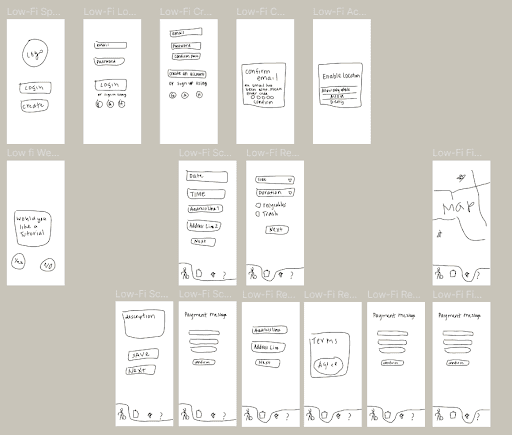
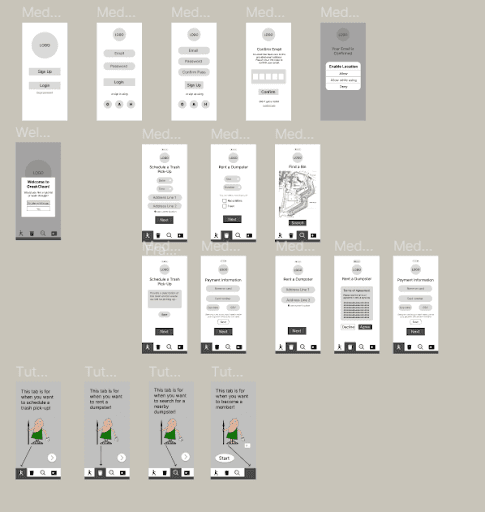
  • used the journey map to inform wireframes and design iterations


iterated user flow


based on that feedback, i created a more detailed and structured second user flow. i added more steps, like confirmation screens, agreement prompts, and payment input fields, to reflect a complete end-to-end journey. i also broke down each path more clearly—especially for dumpster rentals and bin locations—so it was easier to follow. these updates helped align the flow more closely with user expectations around simplicity, transparency, and trust.

Mapped out three key user paths: schedule pickup, rent a dumpster, and find a bin

  • identified user pain points around unclear dropdowns, form complexity, and timing issues

  • focused on simplifying steps, improving clarity in map and form UI, and adding confirmation checkpoints

  • used the journey map to inform wireframes and design iterations


04

04

Result

Result

By incorporating a branding strategy centered around modernity, sustainability, and forward-thinking, Nebul successfully transformed its image into a recognized and respected force in the architectural and urban planning industry. The sleek and contemporary design elements, coupled with visuals of eco-friendly projects and cutting-edge technology, positioned Nebul as a leader in shaping the future of urban landscapes.
hi again! lets grab boba

hi again!
lets grab boba

hi again!
lets grab boba