plantment

yess plants


01

01

competitive analysis

competitive analysis

from looking at competing stores, it was clear that v8 smoke house was falling behind online. they didn’t have any social media presence, and their website lacked the kind of product photos and store context that other shops were using to attract customers. this made it harder for potential visitors to get a feel for what the store offered or even trust that it was worth checking out in person. we knew closing that gap would be key to helping them stand out.

02

02

user research

user research

i led in-depth interviews with 2 individuals and ran a focus group of 6 people to dig into how customers interact with vape shop websites. to get even more insight, i turned the questions into a survey and shared it on social media—over 50 people responded. across all formats, a few clear patterns started to show up. my main goal was to understand:

  • how people prefer to browse (mobile vs. desktop)

  • what they actually look for in customer reviews

  • what motivates them to visit a vape shop in person

  • what kind of info they find most helpful on a website
03

user research

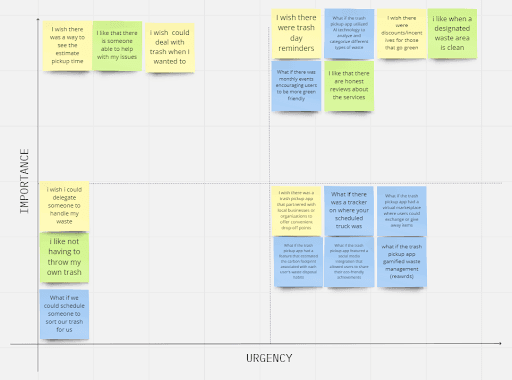
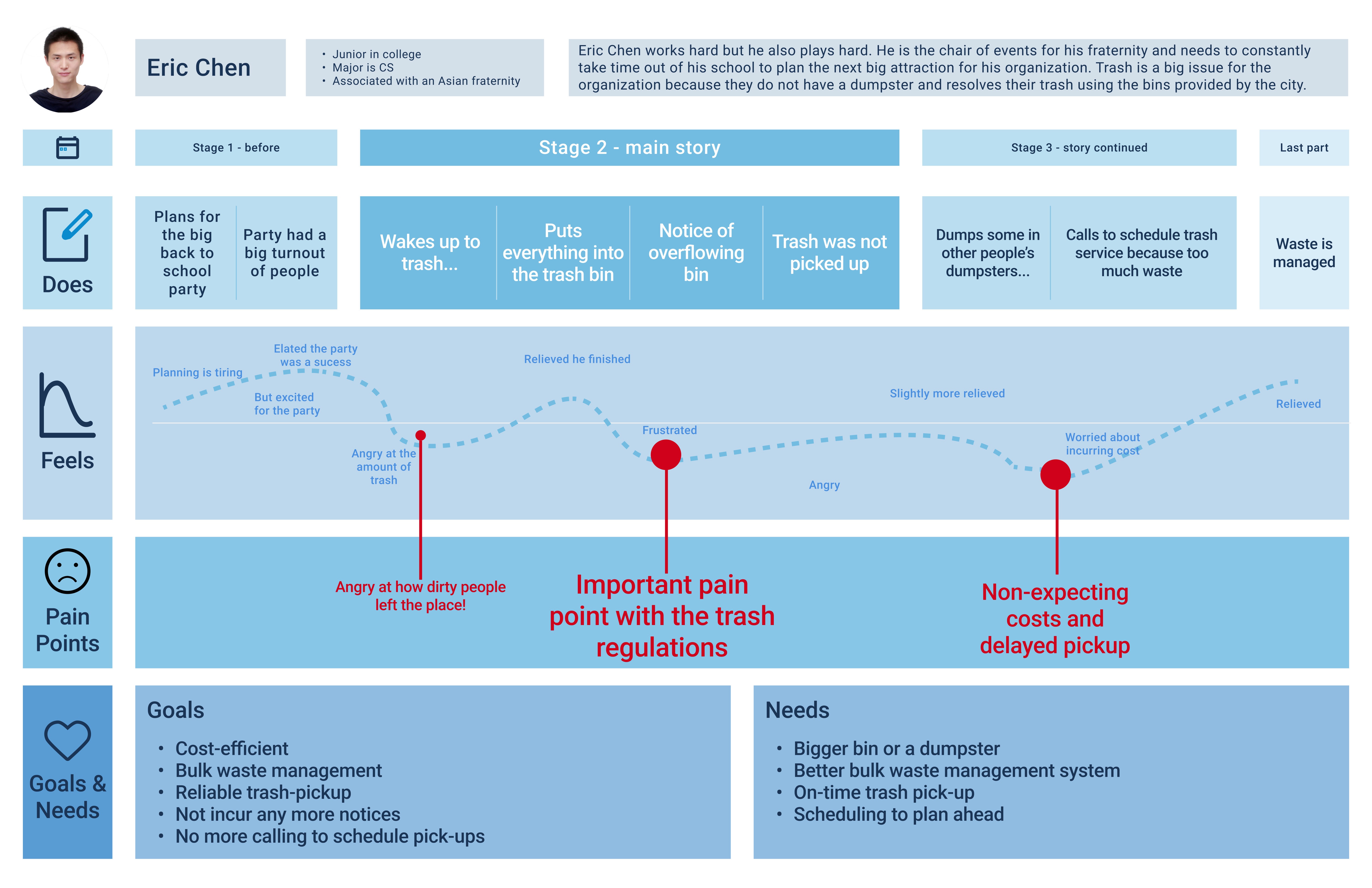
i conducted in-depth interviews with 6 individuals and also shared the questions as a survey on social media. across both formats, common themes and challenges started to surface. my main goal was to understand how students:

  1. currently manage and schedule trash pickups

  2. what pain points they run into

  3. what influences their preferences when choosing a trash service—whether it’s cost, convenience, or reliability
Project showcase laptop mockup

initial user flow


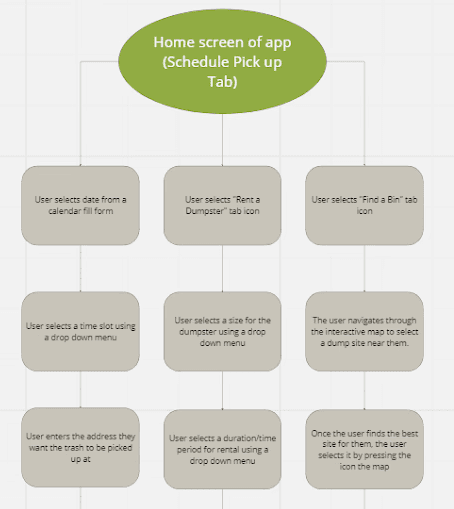
for the first user flow, we mapped out the basic interaction within the greek clean app, focusing on three core actions: scheduling a trash pickup, renting a dumpster, or finding a nearby bin.
the flow captured the main screens and dropdown steps users would go through from the home tab to submission. it helped visualize the general structure, but after conducting interviews, i realized users wanted a clearer, more guided process that reduced decision fatigue and made the experience feel quicker and more intuitive.


initial user flow


for the first user flow, we mapped out the basic interaction within the greek clean app, focusing on three core actions: scheduling a trash pickup, renting a dumpster, or finding a nearby bin.
the flow captured the main screens and dropdown steps users would go through from the home tab to submission. it helped visualize the general structure, but after conducting interviews, i realized users wanted a clearer, more guided process that reduced decision fatigue and made the experience feel quicker and more intuitive.


iterated user flow


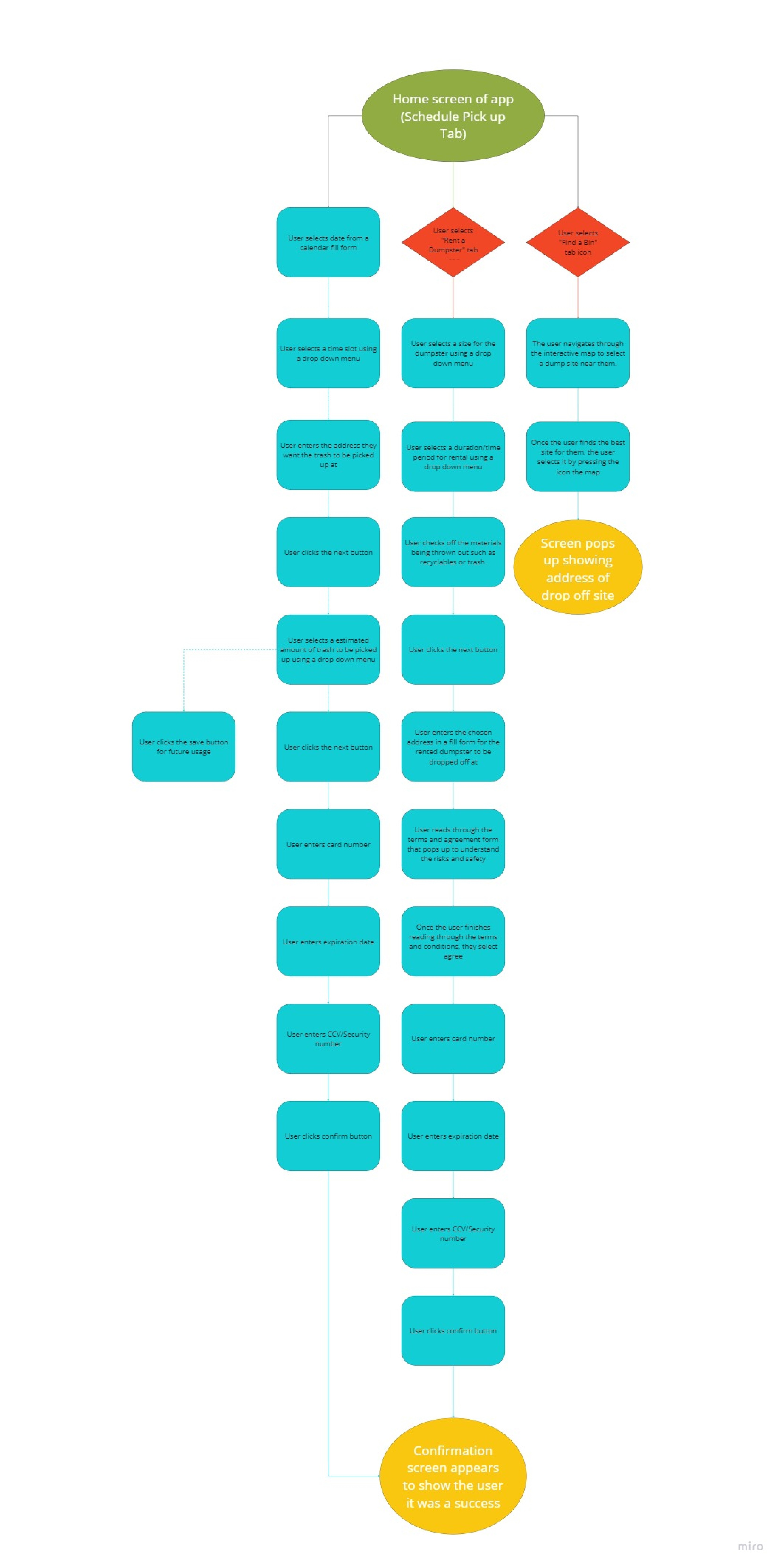
based on that feedback, i created a more detailed and structured second user flow. i added more steps, like confirmation screens, agreement prompts, and payment input fields, to reflect a complete end-to-end journey. i also broke down each path more clearly—especially for dumpster rentals and bin locations—so it was easier to follow. these updates helped align the flow more closely with user expectations around simplicity, transparency, and trust.

Mapped out three key user paths: schedule pickup, rent a dumpster, and find a bin

  • identified user pain points around unclear dropdowns, form complexity, and timing issues

  • focused on simplifying steps, improving clarity in map and form UI, and adding confirmation checkpoints

  • used the journey map to inform wireframes and design iterations


iterated user flow


based on that feedback, i created a more detailed and structured second user flow. i added more steps, like confirmation screens, agreement prompts, and payment input fields, to reflect a complete end-to-end journey. i also broke down each path more clearly—especially for dumpster rentals and bin locations—so it was easier to follow. these updates helped align the flow more closely with user expectations around simplicity, transparency, and trust.

Mapped out three key user paths: schedule pickup, rent a dumpster, and find a bin

  • identified user pain points around unclear dropdowns, form complexity, and timing issues

  • focused on simplifying steps, improving clarity in map and form UI, and adding confirmation checkpoints

  • used the journey map to inform wireframes and design iterations


04

04

result

result

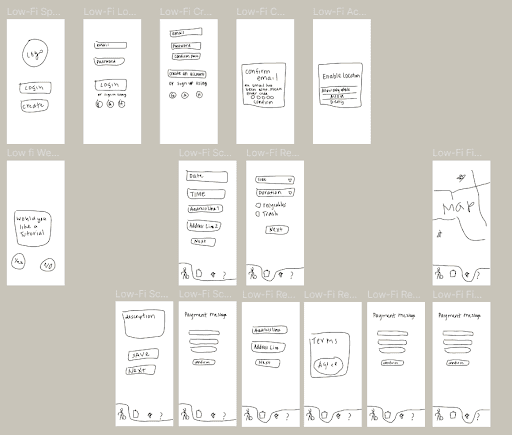
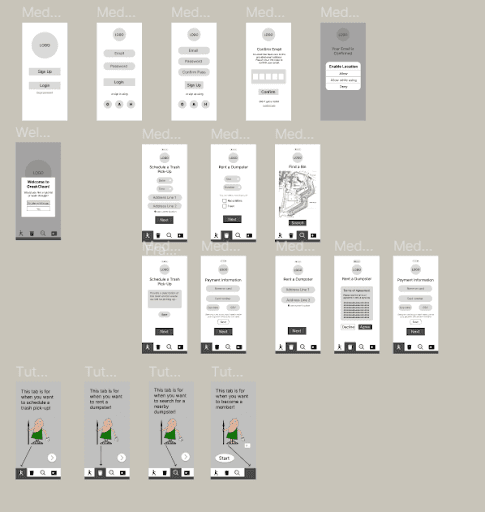
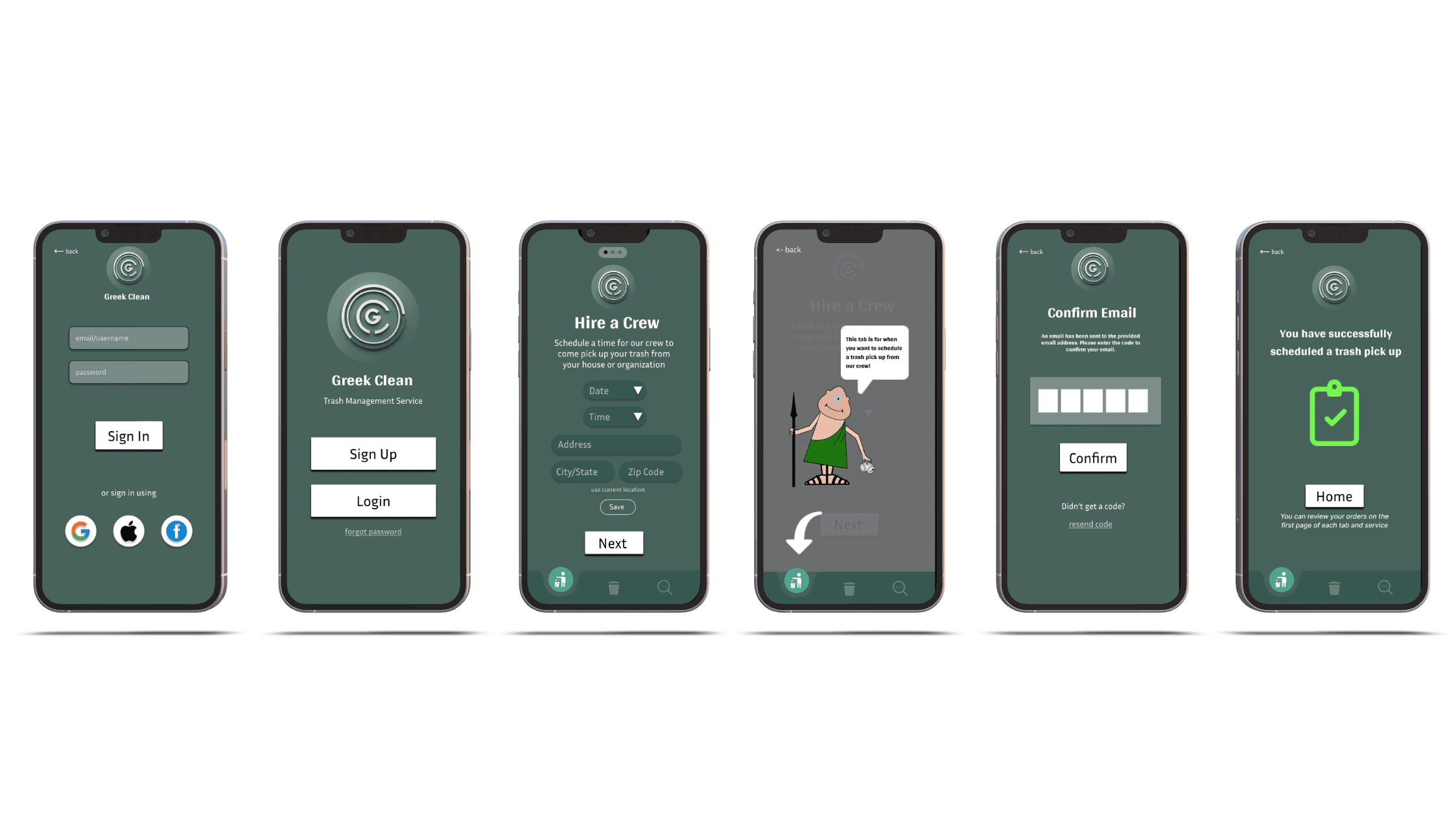
we turned our research insights into low-fidelity sketches and wireframes to play with different layout ideas and user flows. i tested the early versions with peers to see if things felt clear and easy to use. after gathering feedback, we simplified the navigation, added confirmation screens, and made the call-to-action buttons more obvious and accessible.

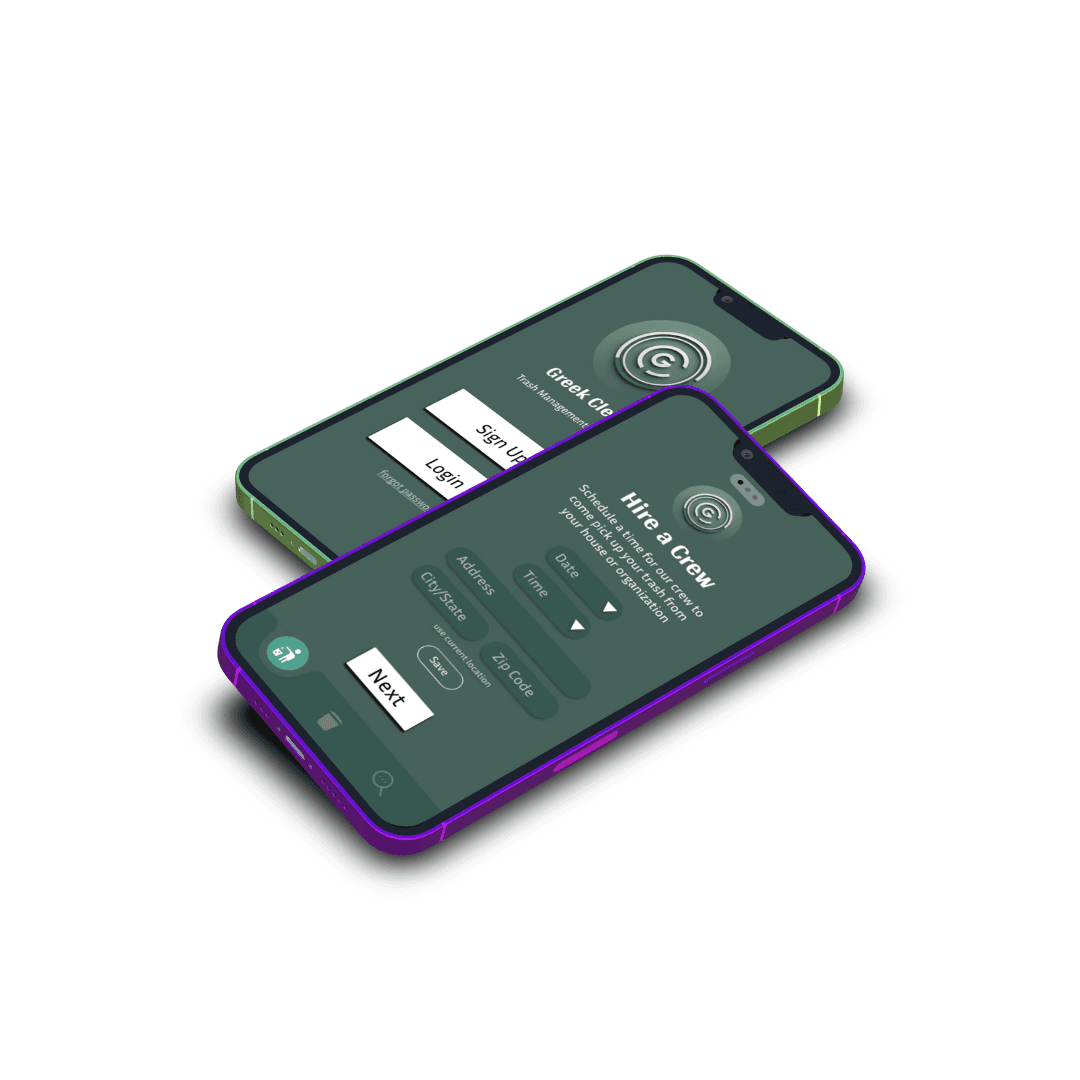
those changes helped shape the final high-fidelity prototype—a clean, user-friendly design that gives students exactly what they asked for: something quick, simple, and stress-free. the final version includes an easy scheduling process, clear pricing, and a mobile-friendly layout that fits into a busy student lifestyle.
hi again! lets grab boba

hi again!
lets connect

hi again!
lets connect

Create a free website with Framer, the website builder loved by startups, designers and agencies.